Key Takeaways: Café Interior Design Malaysia
- Design Is a Revenue Decision: Layout, lighting, and zoning directly affect dwell time, turnover, and average spend.
- Flow and Zoning Come First: Resolve movement before making any aesthetic decisions.
- Compliance Is Non-Negotiable: Café fit-outs in Malaysia require DBKL or MBJB approvals, wet kitchen specs, and Bomba submission.
- Work with F&B Specialists: Interiors Fit Out Industry (IFOI) delivers café fit-outs from design through to compliant handover.
Café interior design Malaysia is a commercial decision before it is a creative one. The cafés that build loyal regulars — and survive past year one — are designed around how the space performs, not just how it looks.
This guide covers the 7 principles that drive repeat visits, the mistakes that kill them, and how IFOI approaches every café fit-out project.
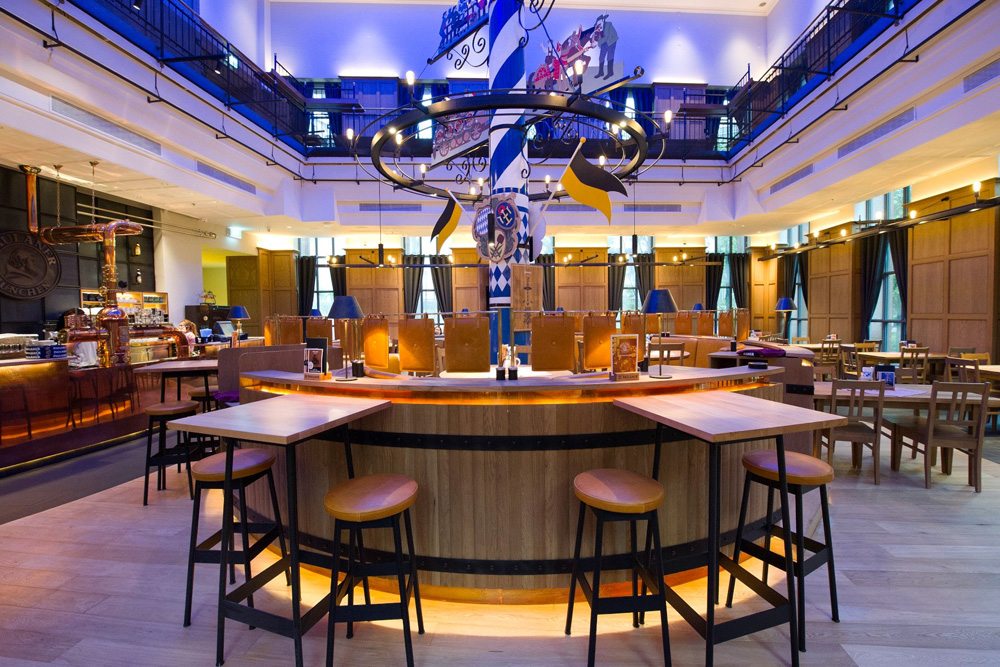
Café interior design Malaysia: commercial-grade execution by IFOI.
Why Café Design Is a Business Decision
Every spatial choice affects a business metric:
- Dwell time — driven by acoustics, seating comfort, and lighting warmth
- Table turnover — shaped by counter position and queue flow
- Social media reach — a direct result of how the space photographs in natural light
- Staff efficiency — determined by distance between espresso station, kitchen pass, and seating
Cafés that treat café fitout Malaysia as seriously as their product are the ones still trading in year three. See how this translates across commercial typologies in IFOI’s commercial interior design portfolio.
7 Café Interior Design Principles That Build Loyal Regulars
1. Flow
Resolve entry-to-counter sightline, ordering vs. collection zones, staff corridor widths, and kitchen adjacency before any layout is finalised. Poor flow costs more to fix after opening than it does to solve at design stage.
2. Zoning
One undifferentiated room serves no customer segment well. Effective coffee shop design KL and JB projects create four zones: counter, social dining, solo/focus, and lounge/dwell. Zone transitions happen through flooring, ceiling height, and lighting — no partitions needed.
3. Lighting
Three layers: ambient (2700K–3000K), task (counter and kitchen), and accent (pendants, cove, spotlighting). Dimmable circuits allow the same space to serve both lunch and evening trade. Single-layer downlighting is the most common and most damaging mistake in cafe renovation JB and KL projects.
4. Seating Mix
Counter stools, 2-top tables, a communal table, and booth seating — each serves a different customer segment and revenue window. The ratio should reflect trading hours and customer profile, not floor plan convenience.
5. Brand Identity
A hero element — a feature counter, a plant wall, a mural — anchors the concept spatially. Brand identity in café interior design Malaysia is built into the architecture first, graphics second. See it applied across F&B and retail in IFOI’s project portfolio.
6. Material Selection
In F&B interior design, materials must survive daily service — not just look good at handover. Sintered stone or quartz countertops, non-slip porcelain in kitchen zones, and specification-grade upholstery throughout. Retail-grade finishes deteriorate within 12–18 months in Malaysian café conditions.
7. Instagrammability
Orient photogenic seating toward natural light between 9am–1pm. Design for visual depth — foreground, midground, background interest in every frame. A consistent colour palette and one flat-lay-friendly surface near a window turns the space into a permanent, zero-cost content asset.
Café Design Mistakes That Kill Repeat Visits
- Single-layer lighting — eliminates atmosphere regardless of everything else
- No acoustic management — hard surfaces in hard rooms drive customers out
- Poor counter placement — queue confusion frustrates customers and slows service
- No zoning — one layout type serves nobody well
- Retail-grade materials — deteriorate fast under food-service conditions
- Compliance left to the end — DBKL and MBJB submissions missed at concept stage cause delayed openings and expensive variations
IFOI’s Approach to Café Fit-Out Projects
Interiors Fit Out Industry (IFOI) is a CIDB Grade G5 design-and-build firm with F&B fit-out experience across Malaysia, Singapore, Thailand, and Indonesia. Every café project starts with an operational brief — trading hours, customer segments, service pressure points — before a single design line is drawn.
IFOI manages DBKL and MBJB submissions, M&E coordination, wet kitchen compliance, and Bomba requirements in-house — no subcontracted gaps, no compliance surprises at handover. See completed F&B work in IFOI’s project portfolio and commercial interior design capabilities.
Frequently Asked Questions
What does café interior design cost in Malaysia?
A shophouse café (500–1,200 sq ft) typically ranges from RM 180,000 to RM 380,000. Full-service brunch concepts (1,200–2,500 sq ft) run RM 350,000–RM 700,000. Always get at least three detailed quotations before signing.
How long does a café renovation take in Malaysia?
A straightforward shophouse fit-out takes 6–10 weeks from site handover. Full fit-outs with wet kitchen and authority submissions run 12–20 weeks. Timeline discipline starts with pre-construction documentation — not during the build.
Can IFOI handle both design and construction?
Yes. IFOI is a design-and-build firm — concept through to compliant handover under one contract. Review completed projects in the project portfolio.
Start Your Café Interior Design Malaysia Project
Contact Interiors Fit Out Industry (IFOI) for a consultation on your next café interior design Malaysia project.